

Rachel and Jordan first came into P1t’s orbit through our work supporting agritourism development in Rutherford County, in the foothills of North Carolina. Some time ago, we helped connect them with a local farmer who was looking for ways to welcome more visitors onto her land through hands-on experiences. In the time since, Rachel and Jordan have established their own workshop and retail space in Rutherfordton.
I met them in person about a year ago at one of our P1t Rendezvous gatherings; moments we create in partner destinations to bring microentrepreneurs together, to strengthen ties, and to celebrate the quiet work of building a collective of locals contributing, and giving shape to tourism in their community. This was one of those meetings where you don’t need much time to notice someone’s passion for their craft, and generosity for their community.
They work with fire, steel, and leather; materials that resist haste and reward patience. In their hands, these materials take shape as tools and objects meant to be used, to endure, and to carry traces of the lives around them. Their work feels grounded in the NC mountains: in the knowledge, rhythms, and ways of life that continue to define this region.
What follows is Rachel and Jordan, in their own words, reflecting on their journey and on what it means to build something, together, in their community.
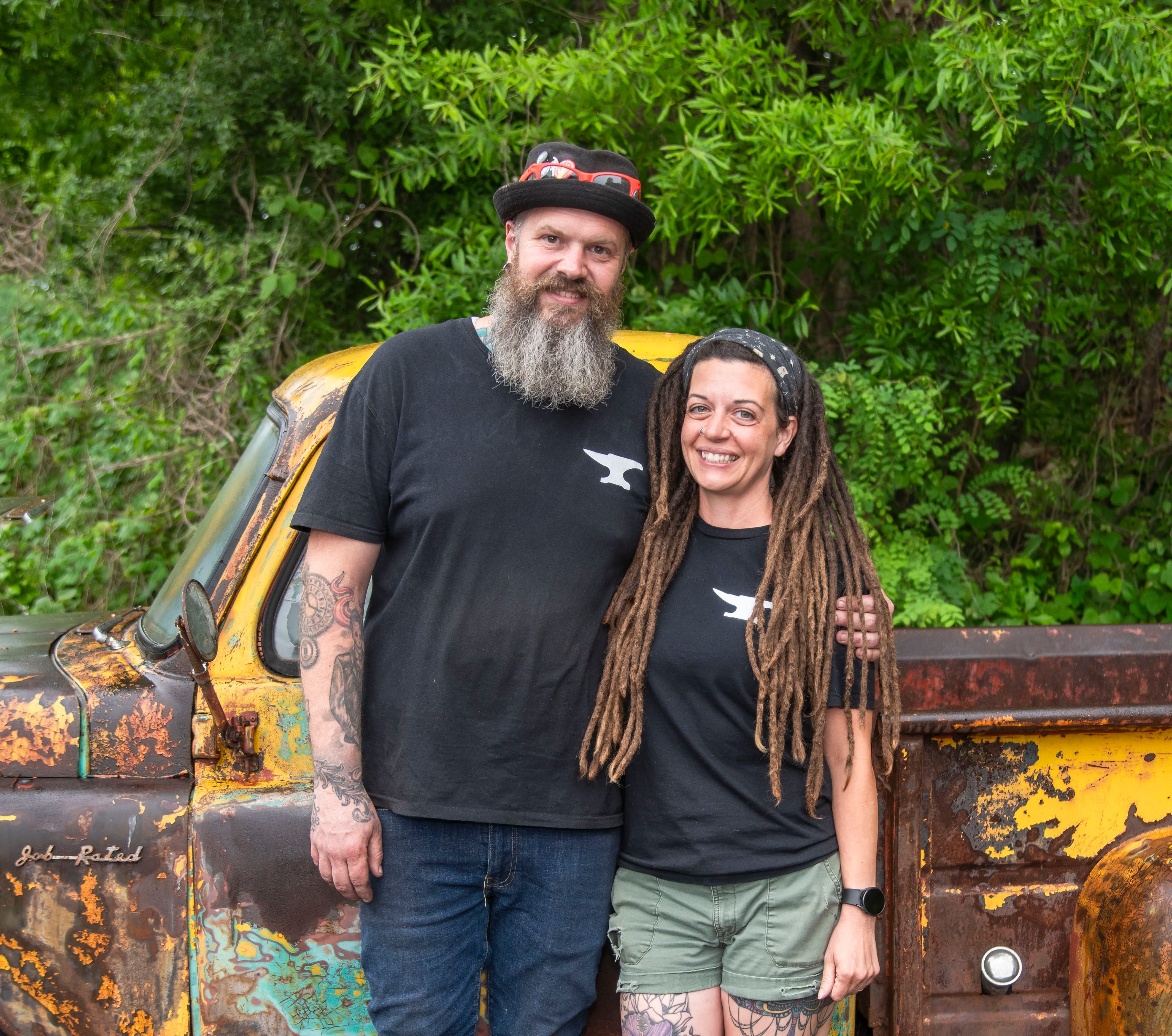
In their own words:
We’ve come a long way from spending late nights out by the coal forge at home, back when this was just a hobby.
Those late nights are actually where the name Night Owl Iron Works came from. Back then, Jordan was a single dad. After he put his son to bed, he’d go outside and work at the forge in a small building near his son’s window. Between heats, he’d walk over and peek in to make sure he was still sleeping. So he forged at night.
When we started dating, a lot of our time together was spent out there. He’d be forging for fun, we’d have music playing, and we’d talk for hours. That’s also where the first few classes happened, before we had the chance to move into a space closer to town.
In the beginning, it all unfolded pretty naturally. I had just started learning to blacksmith as a hobby, then I was making things for other people, and then people started asking if they could learn. So we added classes. That’s pretty much how it started.
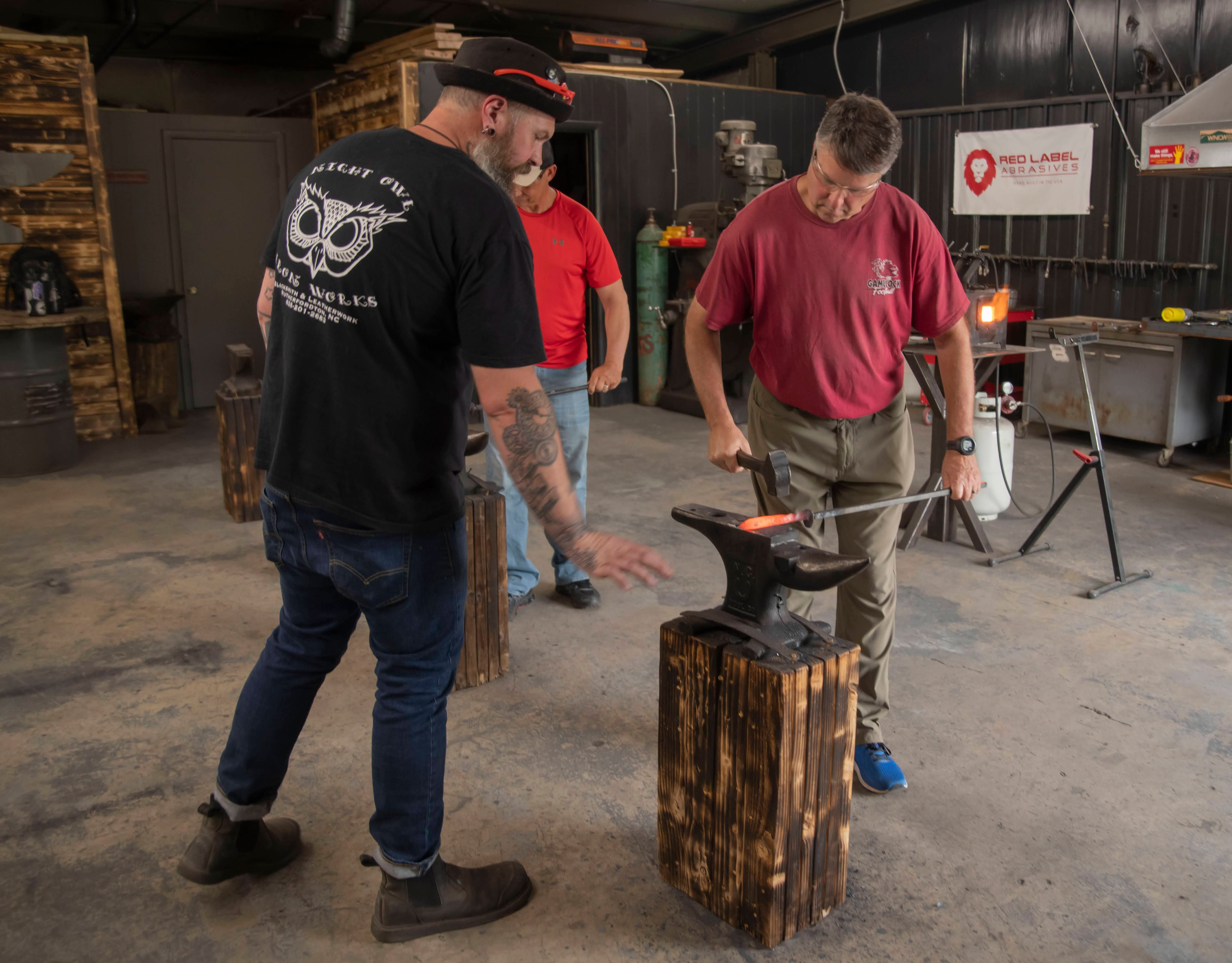
At this point, we’re still not always great at putting into words exactly what we do. But at its core, we make small-batch ironwork and leather goods by hand, and we teach hands-on blacksmithing and leatherworking classes here at our shop in Rutherfordton. Some people come for a few hours, others spend a full day with us, and some even build a visit around multi-day workshops so they can really immerse themselves in the craft. We’ve also created a lounge space in the forge where we host community events and just welcome people to come in and spend time.
We joke that we’ve been making it up as we go along, and that’s partially true. But we’ve also worked hard from the moment we decided to really go for it. When Rachel found herself between jobs in 2019, we made the decision to jump into this fully. It meant letting go of financial security, but we committed to building something together.
A lot of what we offer comes down to making creativity approachable. We know that trying something new—especially something like forging—can feel intimidating. So we put a lot of thought into creating an environment where people feel comfortable stepping into it, whether they’ve never held a hammer before or they’re coming in with some experience and want to go deeper.
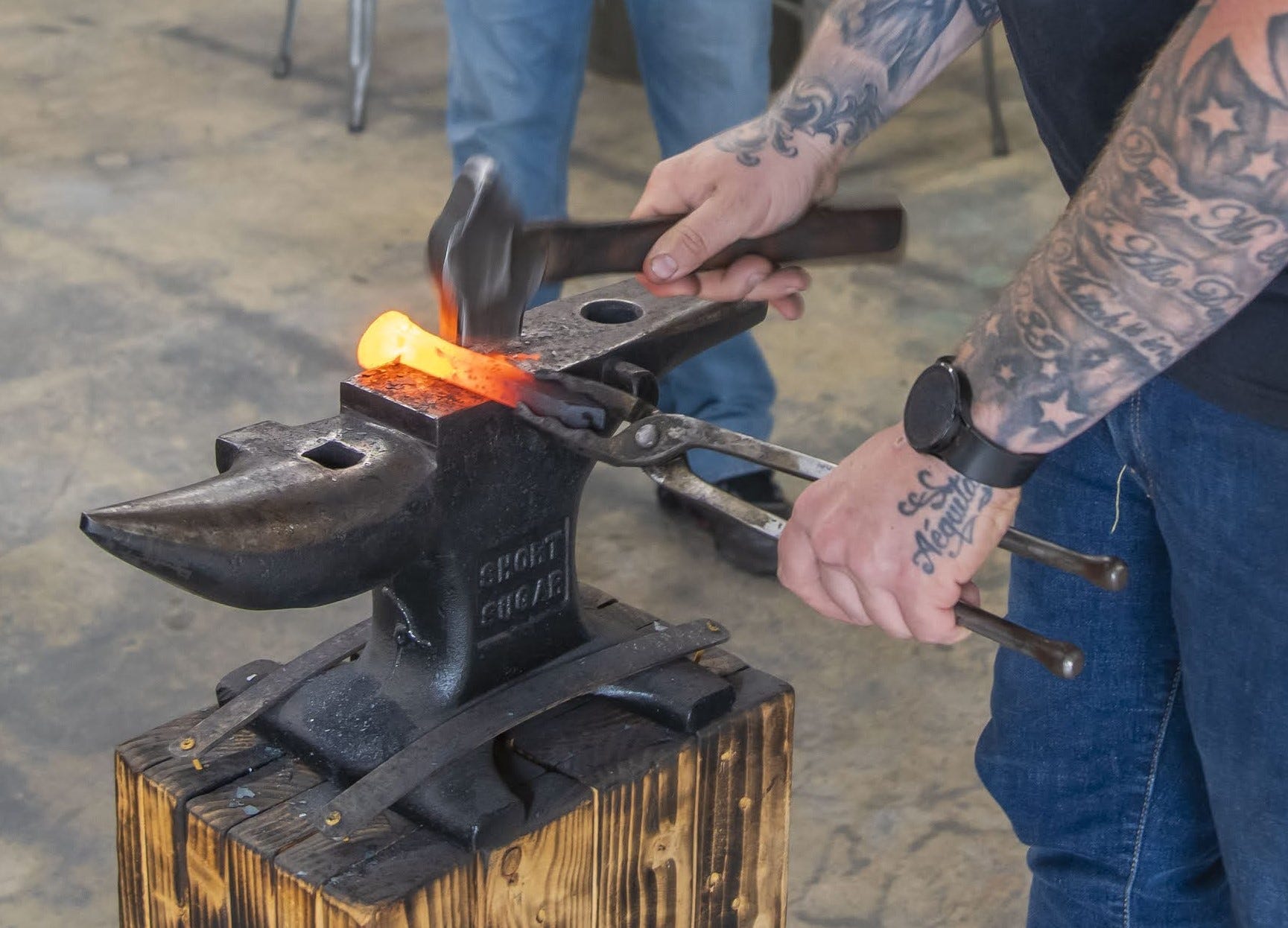
A typical day starts early. Materials are prepped before participants arrive. We go over safety and common practices first, then move into technique, design, and functionality. For full-day classes, we take a break for lunch. It’s a chance to sit down together, talk, and just spend time. After that, we finish the projects, people sign the wall, take a picture, and sometimes they stay and hang out.
By the end of the experience, everyone leaves with something they’ve made themselves—often a knife, tool, or small piece that carries the memory of the day with it. That part never really gets old for us.
Most mornings, Jordan is here before sunrise, making sure everything is ready. This is a working blacksmith shop, so between production, classes, and events, things can get messy. Having time to prepare means we can be fully present once people arrive.
People often come in a little nervous, so we try to keep everything running smoothly but also keep the atmosphere laid-back. This place really is an extension of our home. What we’ve created feels less like a formal class and more like spending time with a few friends trying something new together. Jordan just happens to be a friend who’s been immersed in this craft for a decade.
There’s a lot of technical learning that happens, but it comes through conversation. And that time together matters. We have an entire wall in the shop that’s been signed by participants and visitors, and we still find ourselves standing there, just looking at it and smiling. It’s not lost on us how meaningful it is to share this space with so many people and to hear pieces of their lives while we share what we do.
Our work is deeply tied to this place. We were both raised here, and it’s hard to separate what we create from the life we’ve lived in Rutherford County. There’s a strong tradition here of making things by hand, and we feel connected to that.
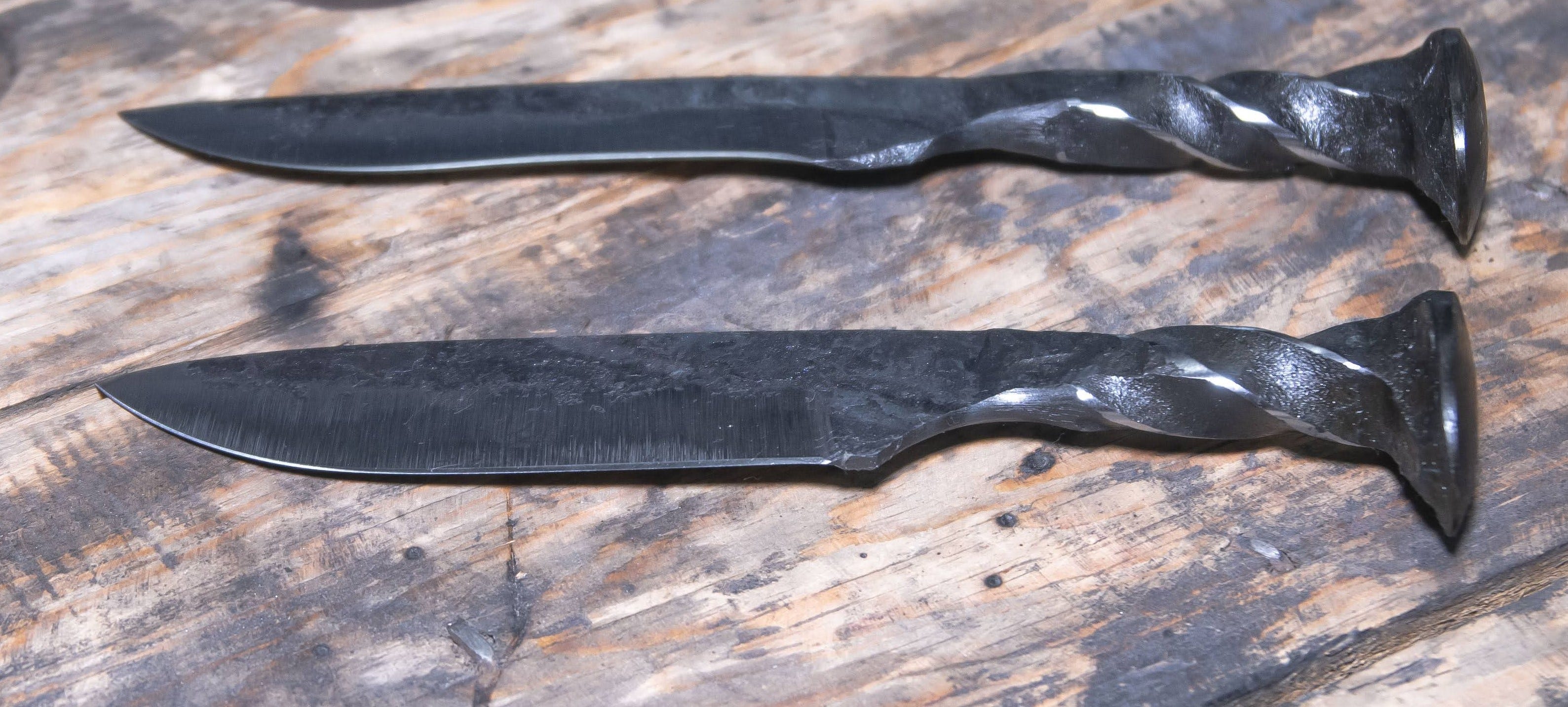
A lot of our products reflect everyday life in this region. Some of our most popular knives are designed for camping, hiking, and hunting, because outdoor life is such a big part of the culture here. We also focus on tools for campfire cooking and home kitchens, shaped by the food traditions we’ve grown up around.
For a lot of visitors, spending time in the forge becomes part of how they experience this place. It’s not just about learning a skill. It’s about slowing down, working with your hands, and stepping into a rhythm that feels very different from everyday life.
We also believe strongly in supporting the local economy. We’ve built relationships with other small business owners in the area; people who are hardworking, genuine, and deeply committed to what they do. Supporting them is one way we try to contribute to the community that’s shaped us.
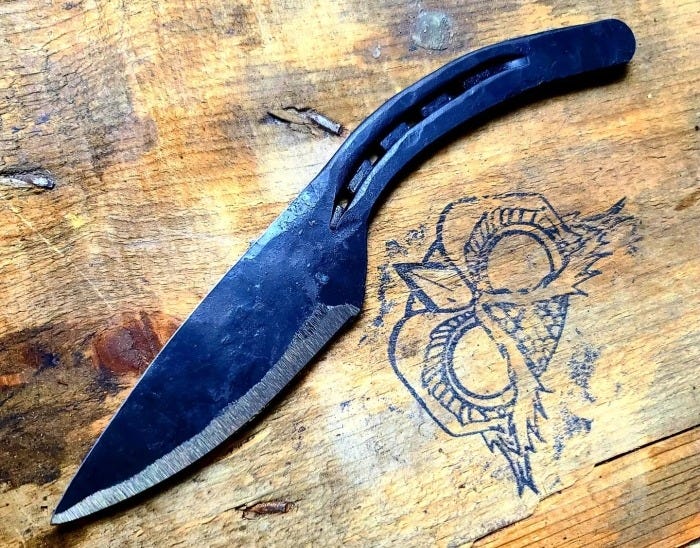
At the same time, we’re always trying to balance maintaining the integrity of our work with meeting what people are looking for. We use high-quality materials and tools, and we make sure that participants in our classes are working with the same professional-grade equipment. We listen closely to what people want to create, even when it challenges us.
One thing people don’t always see is how much time and thought goes into everything we do. The classes help bridge that gap, but there’s still a lot that happens behind the scenes. There’s also a difference between what we make and what people might find in a big box store. Our goal is to create things that last for generations, not just for a season.
Tourism has mostly been a positive for us. We’ve grown because of it. The main challenge is that visitors sometimes want to book last-minute classes, and we’re often already at capacity. It’s hard to turn people away, but many of them end up planning ahead for a future visit, sometimes returning to this area specifically so they can take a class with us.
When things get difficult, and they do, we come back to what keeps us going.
For Creator, Craft, and Community.
That started as a line on a form, something simple we wrote down when asked for a mission statement. But over time, it’s become something more. It’s a way of grounding ourselves in why we do this.
There are real sacrifices in choosing this path, especially when it comes to financial stability. But focusing on that “why” has given us a way forward, in both the good times and the hard ones.
Looking ahead, we think there’s always more that can be done to tell the story of this place. Rutherford County has so much to offer, and so many people doing meaningful work. The more we can work together to share that, the more people will be drawn here.
And once they arrive, it’s hard not to fall in love with it.
Photo credits to Chris Garcia.
To find out more about Night Owl Iron Works products and workshops, please visit this link.
The ideas in this essay are the author’s; AI tools were used to assist with drafting and refinement. Find out more about the People-first Voices here. We are mindful that AI carries real environmental and social costs, and we engage it selectively, holding the tension between its impacts and its potential to support work for the public good.
Kudos to Rachel and Jordan for blending artisanship and instructional experiences to promote creativity and understanding! Wishing them success in their efforts to share their carft and love.